
Businesses look obvious in retrospect.
Once a product is on Amazon, once cartons are arriving at a warehouse, once a company is attending trade shows and moving inventory across borders, it is easy to forget that none of those things existed at the beginning. Somebody had to decide what the company was. Somebody had to fund it. Somebody had to open the bank account. Somebody had to figure out how the product would be tested, packaged, imported, sold, marketed, shipped and supported in a country where the existing operating system did not yet exist.
That was the work behind Muffik Inc. in the United States.
The first job was not selling. It was building the American company.
Muffik was not an unproven product when we began building the U.S. operation. Before the move into the United States, the business had already built substantial sales across Europe, Russia and other international markets. Our internal company history put that pre-U.S. business at roughly $20 million in product sales.
The territorial structure was straightforward. I was responsible for building the United States. My business partners continued to operate Russia, Europe and the rest of the world. That division mattered because the American market needed its own company, testing, packaging, sales channels, importing relationships, customer expectations and operating system.
Independent records still show the international footprint around the brand. MUFFIK s.r.o. appears in European trademark records as a Czech company, and later trade data records exports from the Czech company into multiple markets, including the United States and Malaysia. That public record is consistent with the company I joined: the product already had an international life before Muffik Inc. was built here.
Muffik Inc. was incorporated in Delaware. The U.S. company was structured to establish the brand in the American market, conduct business that could generate its own revenue, support importing and sales, and build a durable U.S. presence rather than operate as a temporary reseller.
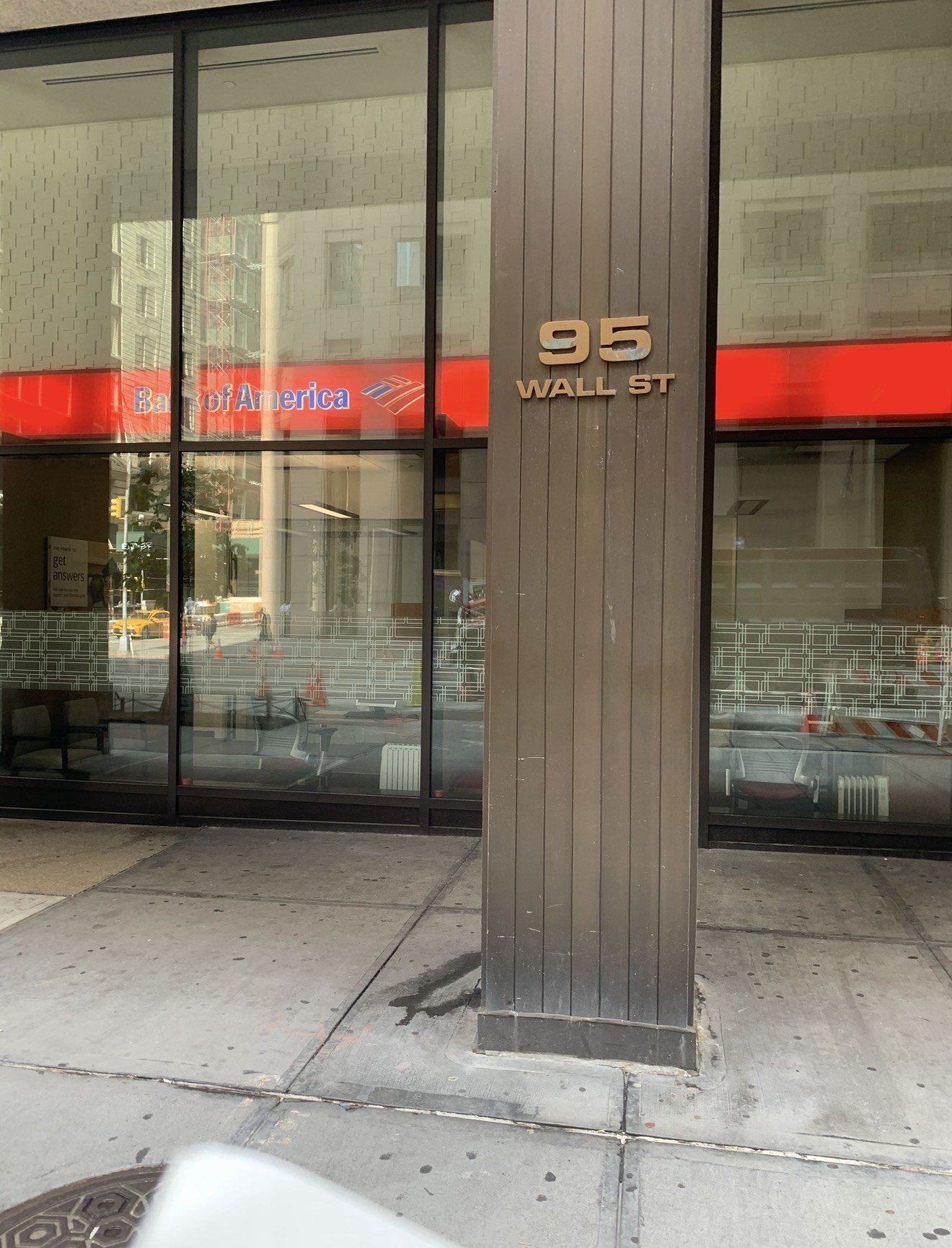
Our New York headquarters was on Wall Street. The international business remained tied closely to the Czech operation. Manufacturing was in Russia, through the manufacturing operation that a former business partner and I owned, and the intellectual-property side of the business was centered in Moscow. That Russian manufacturing base was not an incidental supplier relationship; it was part of the operating structure behind the product we were bringing into the United States.
Public records still preserve pieces of that Russian manufacturing history. Contemporary trade-show material identifies PlastFactor LLC in Russia as a producer of MUFFIK and SPORTO.ONE mats, and surviving retail records describe MUFFIK mats from that period as “Made in Russia.” Later Czech patent records also identify one of my former business partners as an inventor on MUFFIK-related intellectual property. Those records do not reconstruct our entire ownership structure by themselves, but they preserve the Russian manufacturing and product-development footprint that sat behind the U.S. company.
Everyone had a different job
The company did not begin with a large executive staff. It began with a small group of people carrying different pieces of the business.
Jamie Lynn
Contracted acting CEO and U.S. sales. My work centered on business development, U.S. operations, sales, marketplace development, packaging and fulfillment systems, capital, partnerships and the day-to-day work required to make the American company function.
European leadership
The European partners carried the original product knowledge, brand history, engineering and manufacturing relationships. They remained essential to the product while the U.S. operation was being built.
Manufacturing and intellectual property
My manufacturing partner and I owned the Russian manufacturing operation. Manufacturing and the core intellectual-property work were centered in Moscow, while the Czech operation served as the international business center. From there, product still had to move through international freight, customs, U.S. warehousing and final fulfillment.
I am intentionally not naming former business partners in this article. Where their work matters to the history, I refer to them by role—such as my manufacturing partner, European business partner, or U.S. business associate. They were real people with real responsibilities in the company; this article is about the operating history, not about turning former private business relationships into searchable personal profiles.
The first money was almost comically small
One of my favorite photographs from the beginning is not impressive at all.
It is a hundred-dollar bill over a Bank of America deposit slip.
That was the first $100 in the Muffik Inc. U.S. bank account.
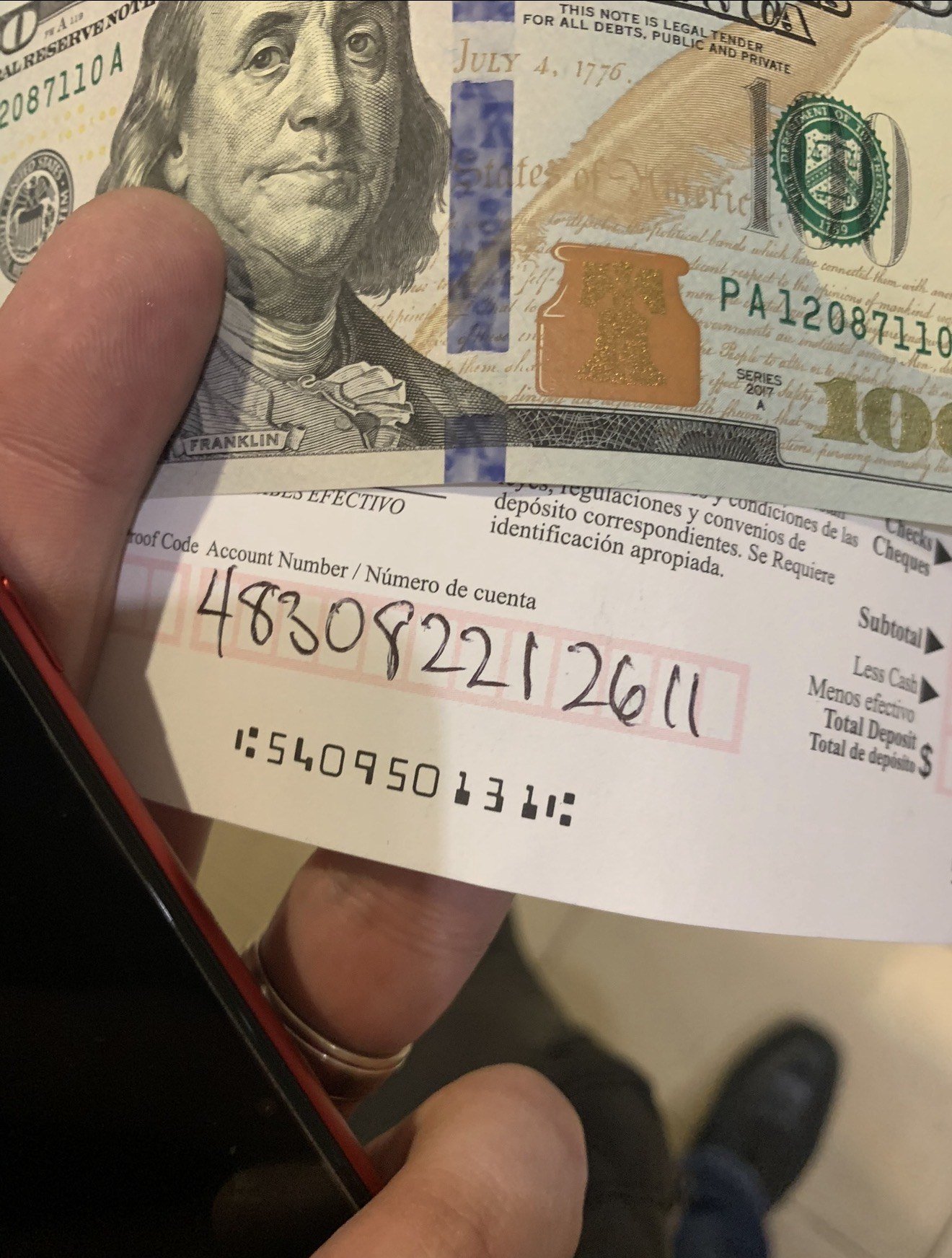
There is something useful about remembering that point. Later, the business would deal with containers of inventory, international freight, trade-show expenses, warehouse costs and tens of thousands of dollars moving at a time. But the U.S. company began with a bank account that needed its first deposit.
Then the capital became real
By late August 2020, the U.S. operation had moved beyond symbolic startup money. I put $30,000 into the business as part of the operating arrangement for Muffik USA.
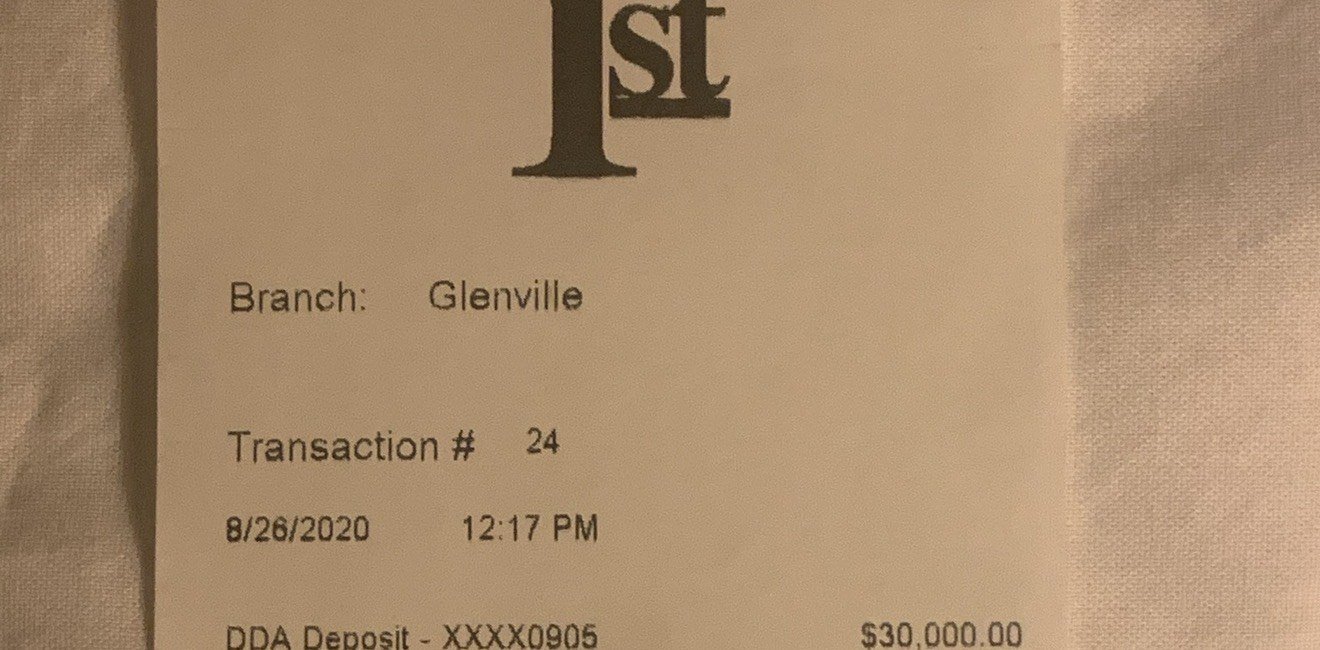
Two days later, the formal joint-venture agreement laid out the purpose of the U.S. effort: establish Muffik in the American marketplace, build Muffik Inc. into a self-funded entity, conduct business that generated revenue, and pursue the New York Toy Fair.
That document mattered because it described the business we were actually trying to build. We were not importing a few boxes to see if somebody might buy them. We were building the American operation.
Before we sold it, the product had to work here
The first products could not simply arrive and be treated as finished U.S. inventory.
We took the product through testing in Buffalo. That step mattered because once we were going to sell into the United States—especially into children's, developmental and sensory markets—we needed to know that the product could pass the testing required for the market we were entering.
Only after the product passed testing did the real commercial build begin.
That sequence is easy to erase from a founder story because testing is not glamorous. It is paperwork, samples, specifications, waiting, questions, corrections and documentation. But it is the dividing line between having an interesting product and having something you can responsibly put into commerce.
Packaging was an operating system
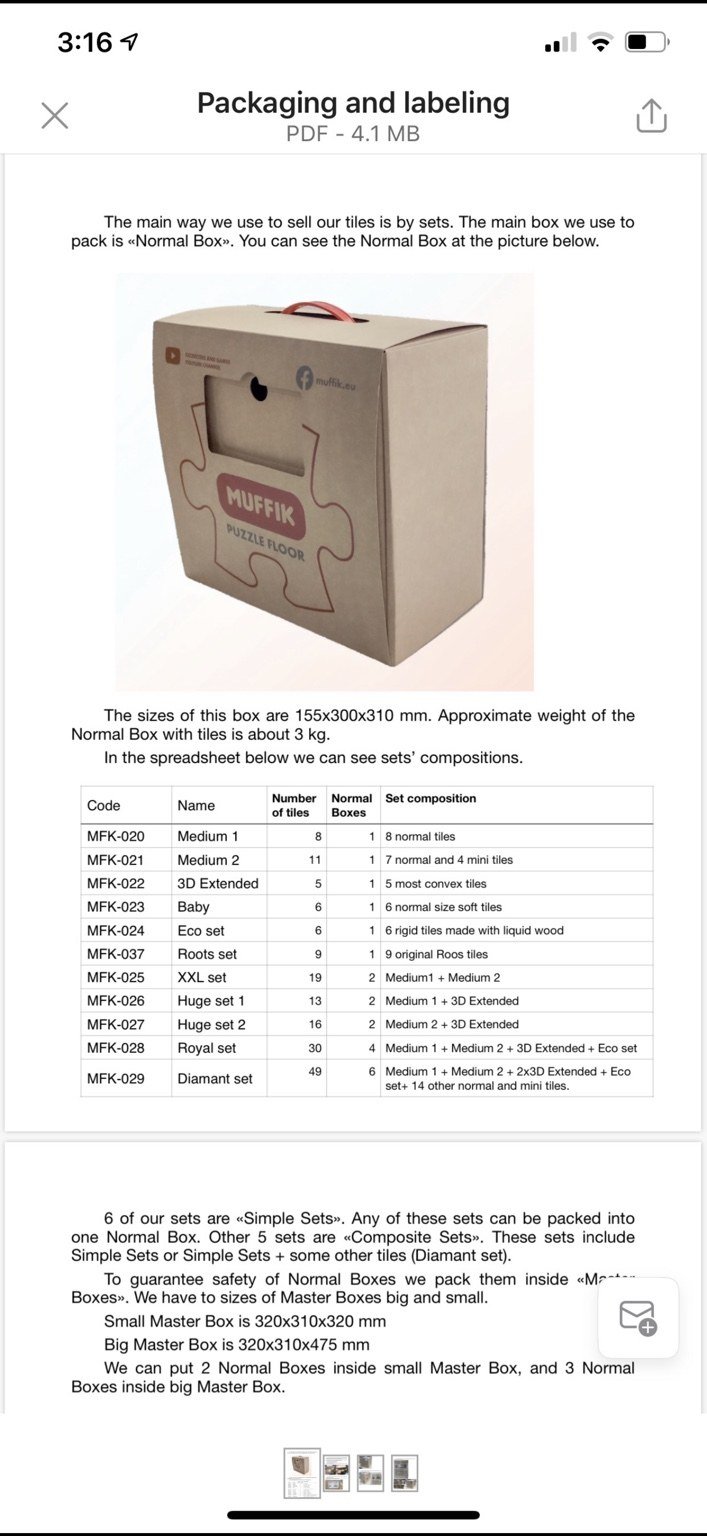
Muffik was not one single SKU in one single box. It was a family of tiles assembled into different sets with different compositions, weights and packaging requirements.
That meant we had to know exactly what constituted a Medium set, a Medium 2, a 3D Extended set, a Baby set, an Eco set, a Roots set, XXL configurations, larger composite sets and master-box combinations.
A customer saw a product.
Operations saw product codes, set composition, normal boxes, master boxes, dimensions, weights, labels, inventory positions and shipping instructions.
Getting that translation right was part of my job.
Then we started selling
Once testing was complete and the product could move into the U.S. market, we began building sales channels.
Amazon mattered. Ecommerce mattered. Direct sales mattered. Influencer and blogger relationships mattered. Trade shows mattered. The toy industry mattered. We were not betting the whole company on one storefront.
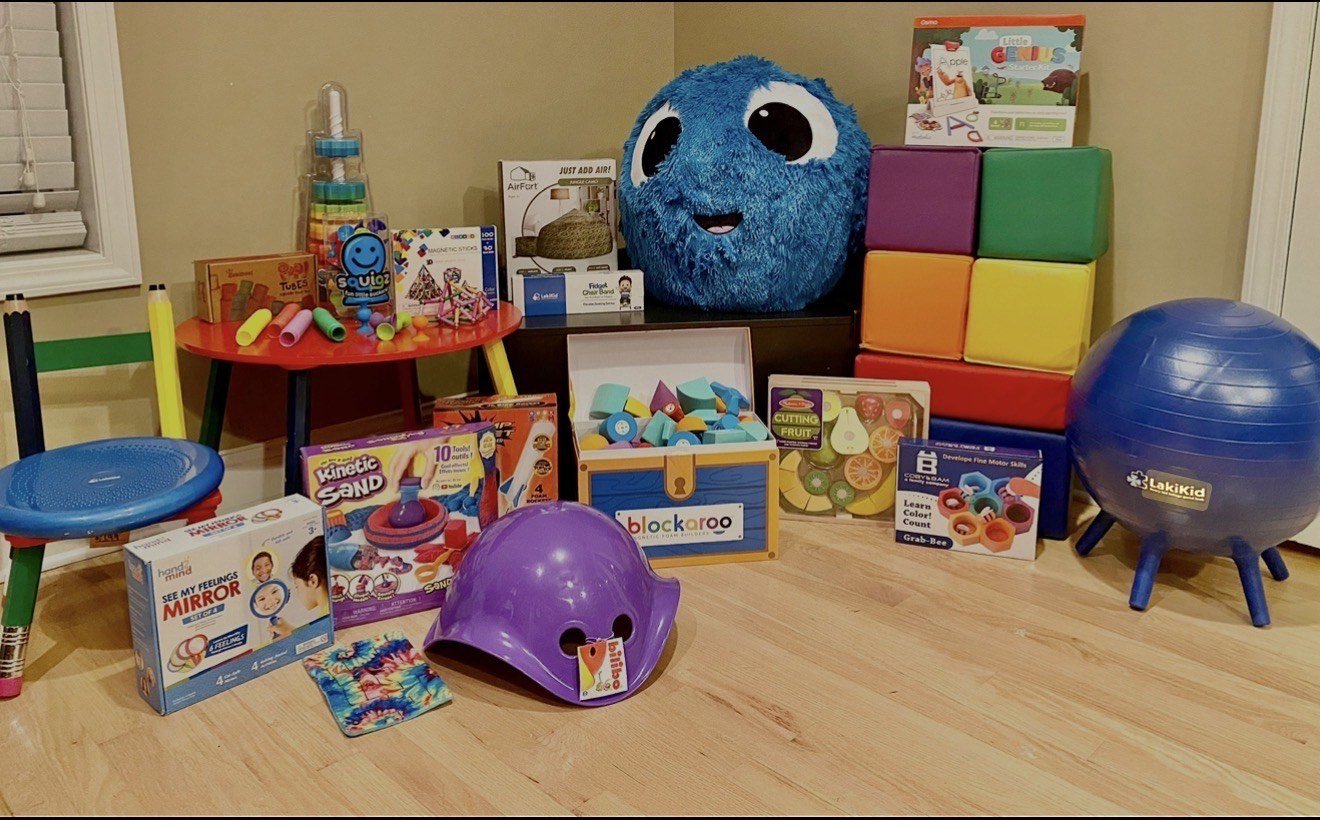
We also had a product with a broader developmental and sensory story, which meant the surrounding category was bigger than one brand. We were participating in an ecosystem of sensory, balance, motor-skill and learning products rather than trying to pretend we existed in isolation.
The U.S. launch left its own public record
One of the useful things about this period is that some of the original U.S. launch material is still online. The Muffik Ortho Puzzle Floors site that Coby and Bam published in September 2020 described the product exactly the way we were positioning it then: as a way to bring the textures and irregularity of nature into ordinary indoor life.
The design story mattered to me. The surfaces were not arbitrary bumps added to plastic. The original concept used real-world natural elements—grass, stones, roots, pinecones, seashells, logs and other outdoor textures—as the basis for the three-dimensional patterns. The point was to reproduce, indoors, some of the variety children naturally encounter when they move barefoot through the world.
That nature-centered language survived beyond our U.S. launch. Current MUFFIK product material still describes nature as the central inspiration for the mats, and current distributors still explain that real natural elements are used to create the templates for the puzzle surfaces.
The U.S. launch also had a social life
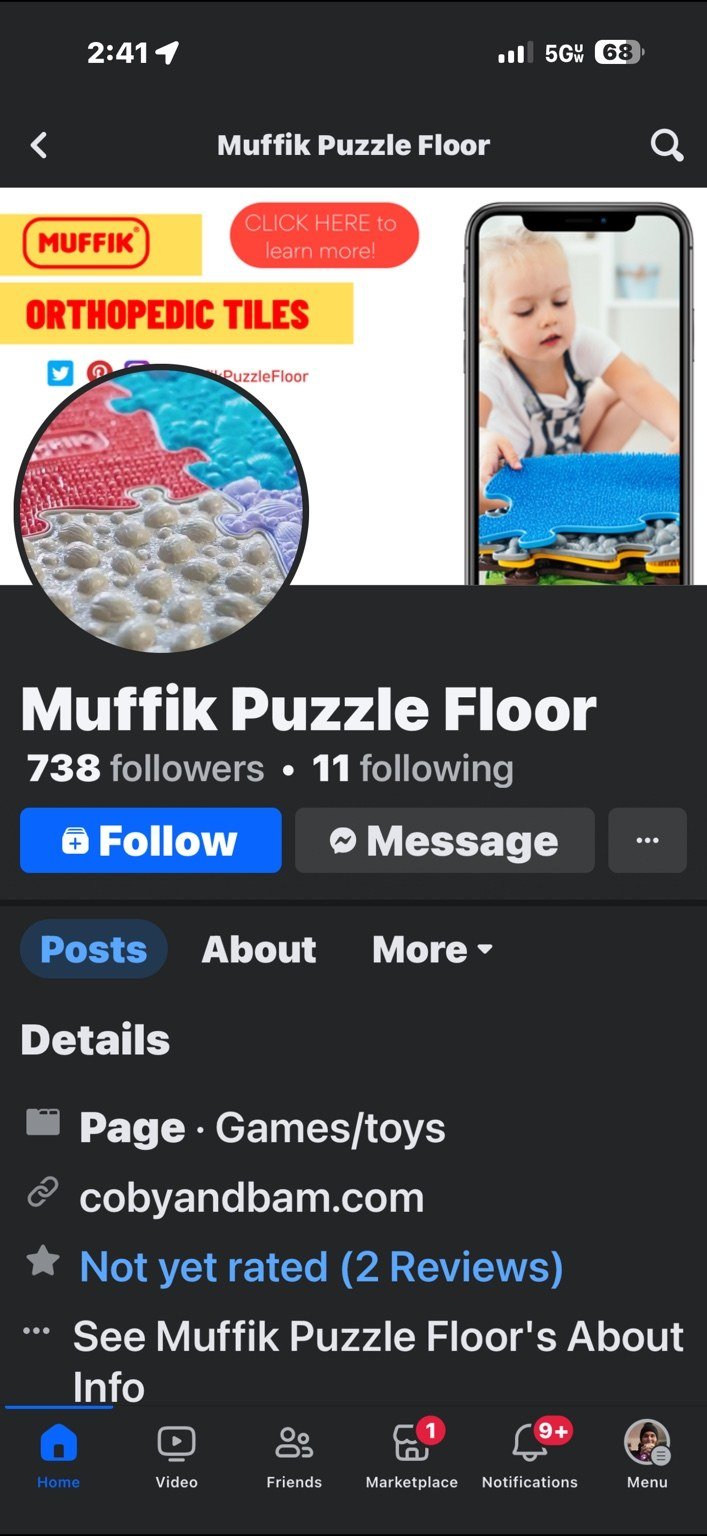
Coby and Bam did not launch Muffik only through marketplaces and press. We built a public-facing U.S. identity around the product through our own blog and social channels. The surviving Instagram account is @muffikpuzzlefloor, branded as Muffik Puzzle Floors and tied to Glenville, New York. The Facebook page also survives under the Muffik Puzzle Floor name and still points back to Coby and Bam.

Customers kept finding reasons to use it
That part of the story did not end with our original launch. Later distributor reviews still describe the same practical appeal we saw in the U.S.: teachers using the mats with students, families returning to them as children grew, and people expanding small sets over time.
“My students and I love the sensory mat.” — later Muffik customer review
Another later customer wrote that their eighteen-month-old kept returning to the mats and finding new games to play. That durability of use was always one of the strongest things about the product: it was not limited to a single prescribed activity.
We Rock the Spectrum gave us a natural global bridge
One of the most important integrations I developed was with We Rock the Spectrum Kid's Gym, a sensory-gym franchise built around inclusive play for children of all abilities.
The fit was obvious. Muffik was a tactile, movement-based product. We Rock the Spectrum had physical locations built around sensory experience, occupational-therapy-informed play and families actively looking for products that supported movement and regulation. Instead of treating Muffik only as something sold from a product page, the relationship put the product into an environment where people could actually stand on it, use it and understand it.
That relationship also mattered internationally. We Rock the Spectrum had already begun expanding beyond the United States years earlier; its first international gym opened in Malaysia in 2016, and by 2020 the franchise publicly described itself as operating across multiple countries. I integrated Muffik into that network as part of expanding Muffik's own reach beyond its original European markets.
For me, that was the larger strategy: do not merely export boxes. Connect the product to organizations that already understood the people it was built to serve. A sensory product becomes much more meaningful when it is part of a real sensory environment instead of being explained only through advertising.
Toy Fair was part of the plan from the beginning
The New York Toy Fair was not something we invented later to make the company look established. It was part of the original U.S. business plan.
Then 2020 happened.
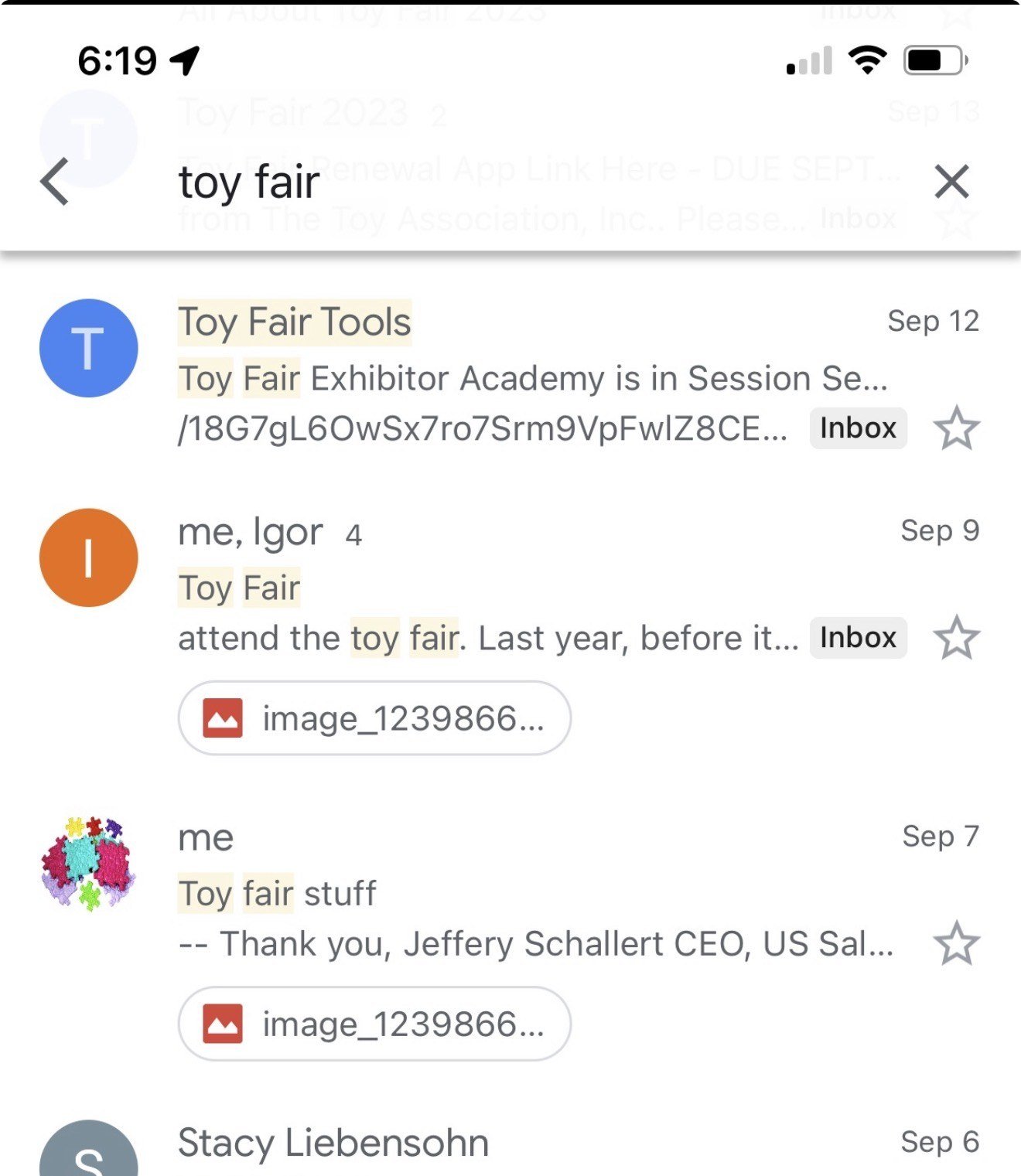
The event was canceled and rescheduled. The next scheduled cycle was disrupted again. We registered again for 2022. That event was canceled and moved again, ultimately pushing the opportunity into 2023.
That sounds almost funny now. At the time, it was another example of how difficult it was to build a physical-product company through that period. Every time the operating environment appeared to stabilize, another assumption moved.
The work was increasingly international
By then the company was not merely a domestic startup buying product from overseas.
We had an operating relationship spanning the United States, the Czech Republic and Russia. Product was manufactured, packaged, freighted, imported, cleared, warehoused and distributed. U.S. customers and marketplaces needed domestic service even when the product originated thousands of miles away.
That meant the U.S. operation had to become the translator between worlds.
The European side understood the product and manufacturing history. The American side had to translate that into U.S. testing, sales language, customer expectations, marketplace requirements, freight practices, packaging standards, fulfillment, returns, influencers, trade shows and commercial relationships.
That translation was the company.
See the company and the product in motion
These are the three videos I want attached to this history because together they show three different parts of what Muffik actually was: the Czech operation, the product story we used in the United States, and the broader company presentation.
Welcome to MUFFIK's home. This is the Czech operation video—the office, stock and the place where the international side of the business actually worked.
Muffik Puzzle Floors — What is Muffik? This was part of our U.S.-facing presentation of the product: nature, movement, barefoot sensory experience and the reason the surfaces were designed the way they were.
MUFFIK About Us. Another strong company overview showing the product in use and the operating environment around it.
And then QVC changed the scale
Before COVID broke the normal operating calendar, I was preparing to go to QVC.
The shoot was roughly a month away when the shutdown hit. The expectation communicated to us was that the product needed enough inventory on hand to support the potential television conversion rate—up to roughly seven conversions per minute. QVC could not put the segment on air unless the inventory supporting the appearance had actually arrived.
That changed our inventory position dramatically.
Containers were coming because the television opportunity required real depth behind the product. We could not show up, sell aggressively for a few minutes and then tell customers we had no inventory.
Then customs and international movement stopped behaving normally.
Some of the product had arrived. More was still moving. Some had not cleared. The television plan disappeared into the pandemic. The inventory did not.
That is the bridge into the 2020 story most people see later
When people look at the later photographs—garages packed with cartons, storage units full of product, U-Hauls running back and forth to New Jersey, pallets in a driveway—it can look like a company simply bought too much inventory and then improvised.
That is not what happened.
The inventory position was connected to a real growth plan. The company had been building toward larger distribution, television, trade shows and national sales.
COVID did not create the ambition.
COVID changed what all of the infrastructure was for.
We built the company for growth. Then the world changed, and the same infrastructure became the thing we had to fight to preserve.
What I remember most is how ordinary the beginning was
People like to tell startup stories from the point where the company becomes impressive.
I remember the first hundred dollars.
I remember putting real money into the company because it needed to become self-funded.
I remember testing in Buffalo before we could start selling.
I remember packaging documents, international emails, trade-show registrations, freight, labels, boxes and all the pieces nobody sees once a product is sitting neatly on a product page.
I remember Wall Street before the garages.
I remember the operating system before the emergency.
And that is why the later 2020 story matters differently to me. The garages and U-Hauls were not the beginning of the business. They were what happened after we had already done the long, unglamorous work of creating one.
Start: incorporate Muffik Inc. in Delaware and establish the U.S. operation.
Fund: open the American bank account, seed it, and later capitalize the operating business.
Validate: take the product through U.S. testing in Buffalo.
Translate: turn European product knowledge into U.S. packaging, fulfillment, sales and customer systems.
Sell: begin ecommerce, marketplaces, direct sales and collaborations.
Scale: build toward Toy Fair, QVC and container-scale inventory.
Adapt: when COVID destroyed the original operating assumptions, rebuild the system around the promises that still existed.
Independent records that still exist
This story is primarily a first-person account of the company I operated, supported throughout by the photographs and business records shown here. A few useful pieces of the external record remain online as well: European trademark publications identify MUFFIK s.r.o. in the Czech Republic; Russian trade-show material identifies a Russian company producing MUFFIK mats; contemporary retail listings identify the mats as made in Russia; Czech patent records preserve a former business partner's role as an inventor on later MUFFIK intellectual property; trade-data services record international Muffik shipments; and We Rock the Spectrum's own history documents its international expansion beginning with Malaysia in 2016 and its later growth across multiple countries.
Those records are useful because they show the larger commercial environment around the story. They are not the story itself. The story is what it took to turn an already successful international product into a functioning American company.
Muffik Inc. did not arrive in the United States as a finished company. We built it here—one decision, one document, one shipment, one test, one sale and, quite literally, one first hundred-dollar deposit at a time.