Big Push is one of those stories where a screenshot of meeting notes looks boring until somebody explains what was actually happening.
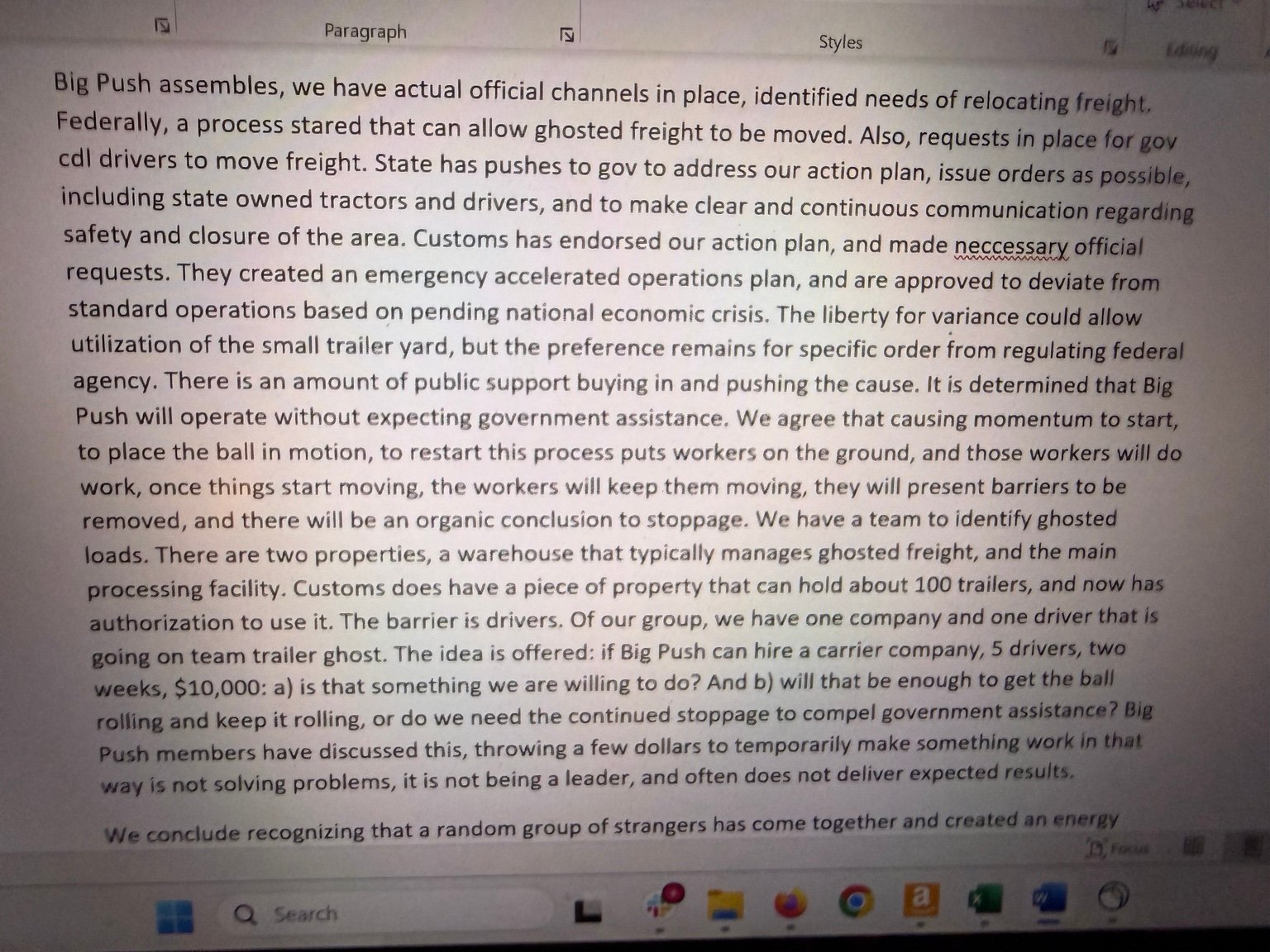
Freight was stuck. Customs could move faster under emergency conditions, but the physical bottleneck was brutally ordinary: ground, drivers, staging, ownership, phone calls, and a clean paper trail. Everybody had an action plan. That was part of the problem.
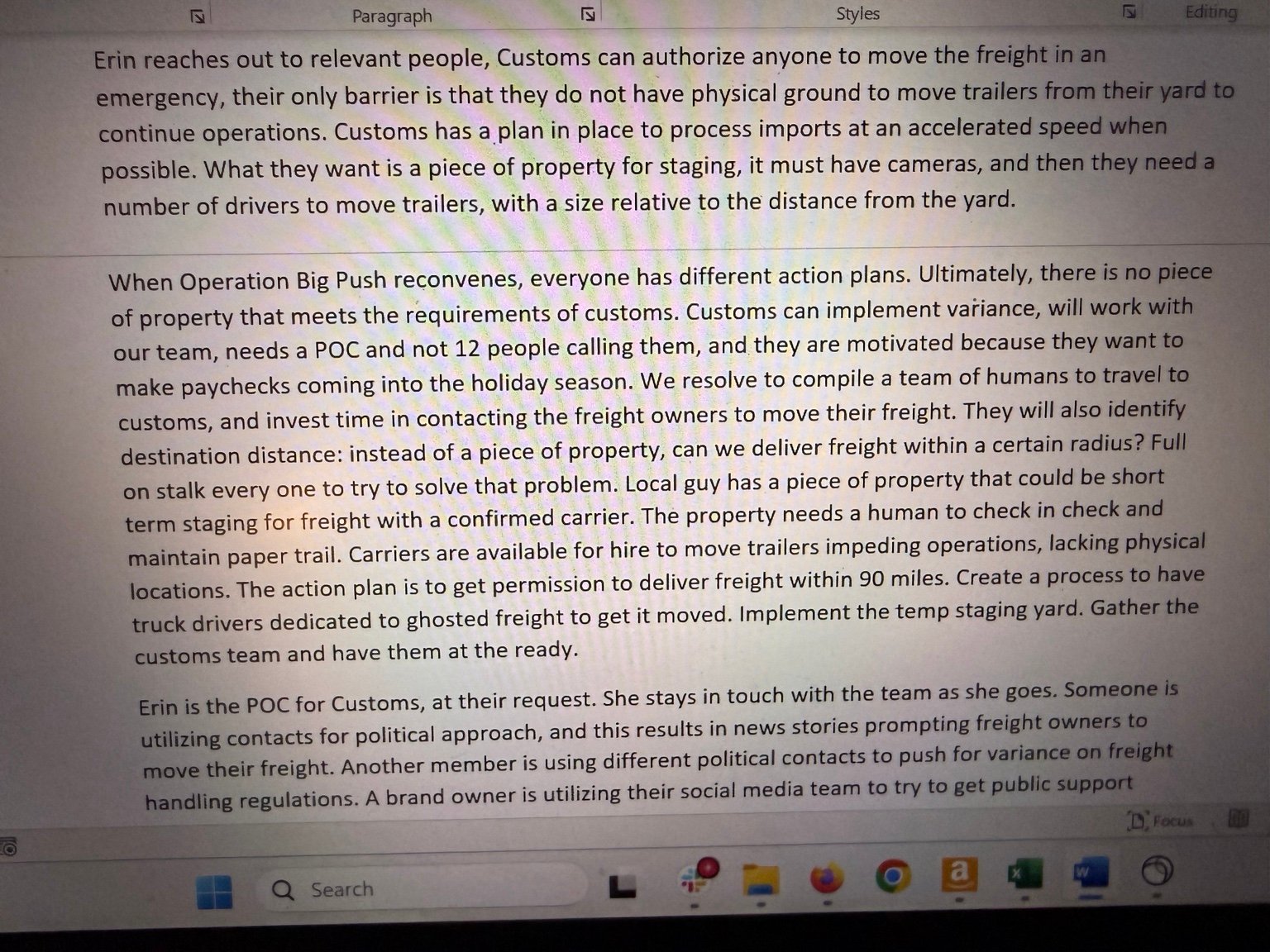
Erin became the Customs point of contact because Customs asked for one person instead of twelve people calling them. Other people worked political channels, public attention, carrier capacity, local property, and variance questions. The group kept narrowing the system until the next physical action became possible.
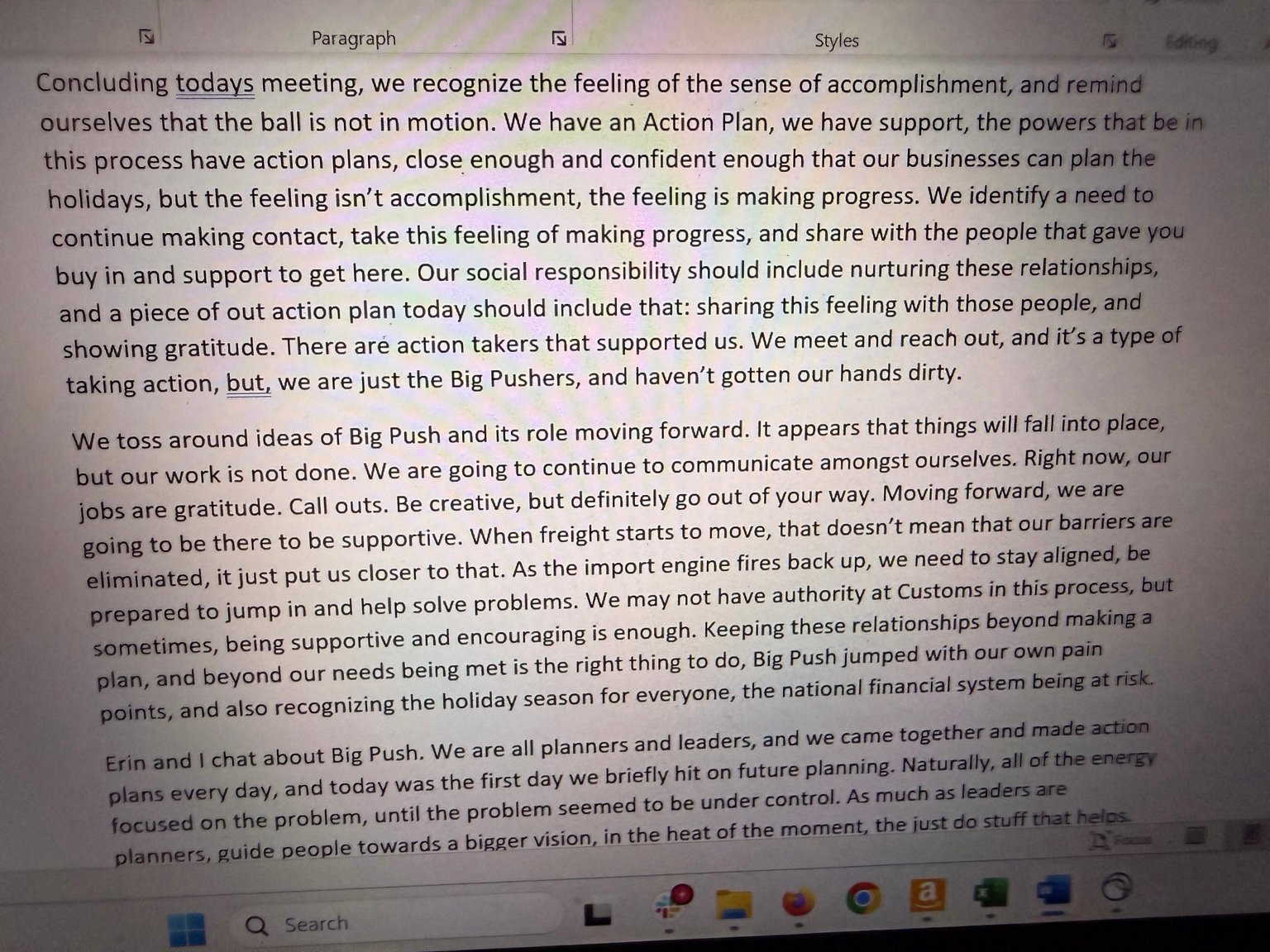
The part I still like most is the culture buried in the notes. We explicitly told ourselves not to confuse motion with completion. We had made progress. We had not solved the system yet. Our immediate job after the meeting was gratitude: call people, thank them, keep the relationships healthy, and remain available when the next barrier surfaced.
That is probably the cleanest description of how I solve operational problems. I do not begin with the perfect finished system. I get the ball moving, watch where it hits resistance, and use the resistance to reveal the next thing that needs to be engineered.